
What Is Stigma?
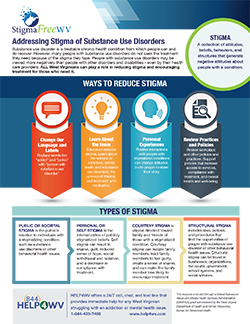
Stigma is a perceived negative attribute that causes someone to devalue or think less of the whole person. Stigma can be defined as prejudicial attitudes, beliefs, behaviors, and even discrimination against people with substance use disorders or other behavioral health issues.
Public or Societal Stigma
Public or Societal Stigma is the public’s reaction to individuals with a stigmatizing condition (such as substance use disorder or other behavioral health issues). Public stigma is exemplified through the public’s behavior and includes groups such as educators, employers, healthcare providers, journalists, and police among others.
What does it look like?
- Stereotypes such as the characterization that people with substance use disorder are dangerous or lack willpower
- Negative emotional reactions like fear and anger
- Avoidance, isolation, and rejection of people with substance use disorder
- Lack of public support of services for people with substance use disorder
Personal or Self Stigma
Personal or Self Stigma is the internalization of publicly stigmatized beliefs. Self-stigma can result in shame, guilt, social withdrawal, and isolation
What does it look like?
- Individuals believe the negative stereotypes resulting in low self-esteem
- Not seeking help or treatment because of shame or guilt
- Not pursuing work or housing opportunities because of feelings of low self-worth
Structural Stigma
Structural Stigma include policies and procedures that limit the opportunities of people with substance use disorder or other behavioral health issues.
What does it look like?
- Discriminatory policies related to employment, housing, treatment, etc.
- Can be found in businesses, courts, government, school systems, social service agencies, etc.
Examples of Stigma
- Hurtful words and labels such as “junkie,” “addict,” and “alcoholic”
- Perception that addiction is a personal choice (rather than a chronic disease)
- Receiving lower quality of care in the healthcare system
- Being profiled by law enforcement
- Believing that people with substance use disorder aren’t worth saving
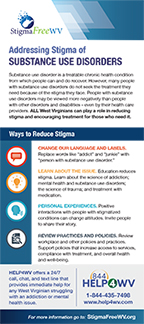
Addressing Stigma: WV Stigma Webinar
 Ending Discrimination Against People with Mental and Substance Use Disorders